

Rock-solid second chances with dental crowns
Living with a tooth that’s badly decayed, cracked, or just plain worn out, can be a major dampener on your enjoyment of life. Tooth pain that strikes at the worst times, or the urge to hide your smile, can take a real toll. It’s easy to feel increasingly frustrated, even to the point that you think it’s time to have the damaged tooth extracted so you can get a synthetic tooth instead.
Pause before you take that irreversible step. For teeth that have been compromised, dental crowns can be the lifeline you need to save your tooth. They can restore your tooth’s strength, shape, and appearance, so you can eat, speak, and smile with confidence again. In this guide we’ll explain what dental crowns are, when they’re needed, and what to expect when you get one.
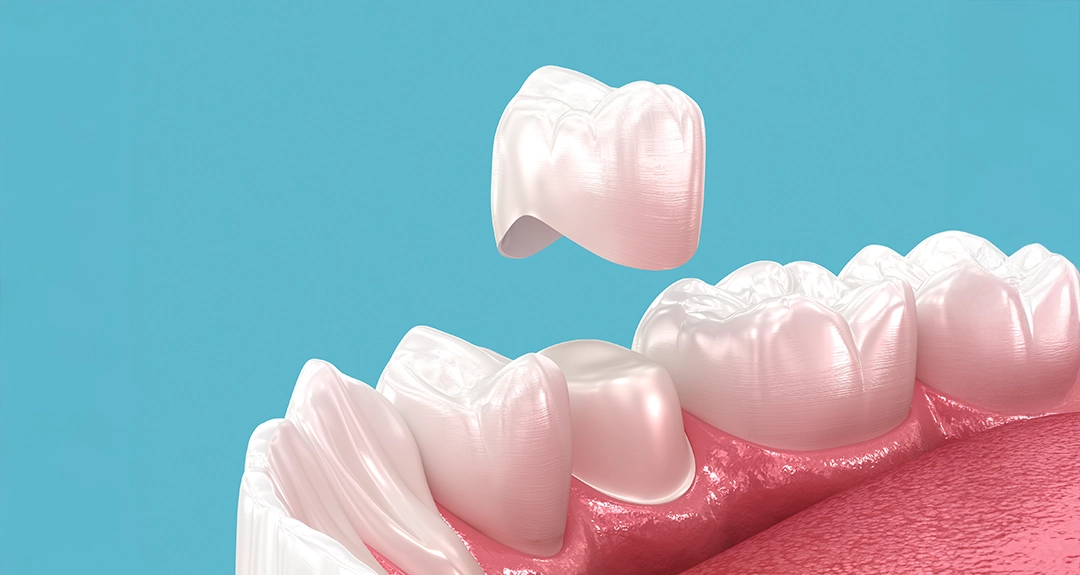
So, what’s a dental crown?
A dental crown is basically a new top for a weakened tooth. It’s custom-made to look exactly like your other teeth, and completely encases the tooth it’s designed to protect. By forming a durable tooth-shaped shield over the tooth, it restores proper shape, size, colour, and function, renewing its strength while still preserving as much healthy natural tooth structure as possible.
Modern crowns are crafted to blend seamlessly with your smile, matching the translucency and contour of real teeth. Once your crown is seamlessly bonded into place, it can feel so natural that you’ll probably forget it’s even there.
What are dental crowns made of?
Dental crowns can be crafted from a range of materials, and the best choice for you depends on factors like your bite, the tooth being restored, your aesthetic goals, and your lifestyle. Common options include:
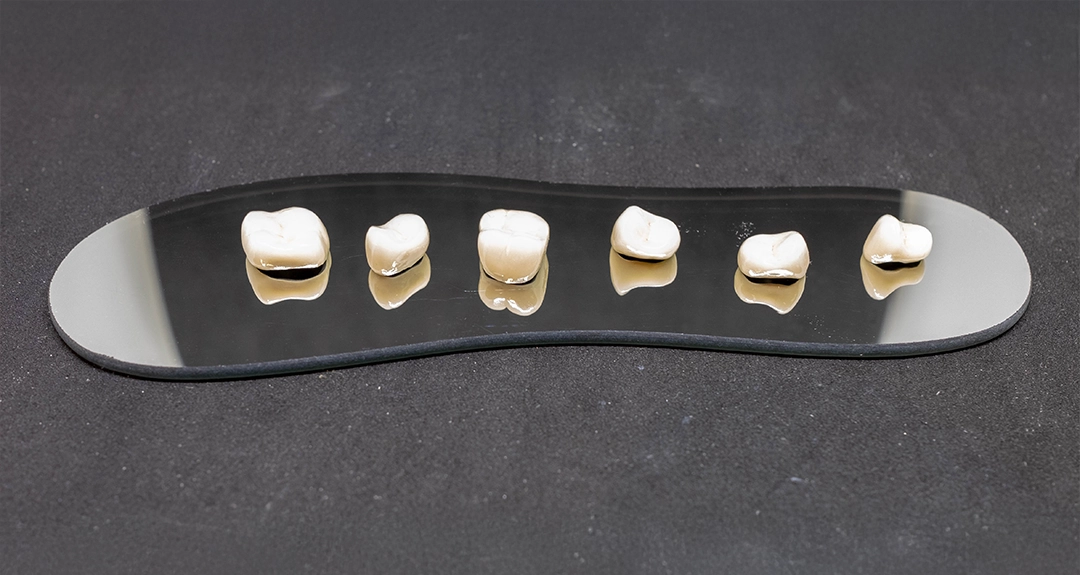
Porcelain / ceramic crowns
- Colour-matched to blend naturally with your surrounding teeth
- Translucent for a realistic, lifelike appearance
- Ideal for front teeth or highly visible areas
- Metal-free and suitable for patients with sensitivities or allergies
Zirconia crowns
- Extremely strong and fracture-resistant
- Excellent for molars and teeth that handle heavy chewing forces
- Can be highly aesthetic, especially in multilayer or high-translucency zirconia
Porcelain-Fused-to-Metal (PFM)
- Metal base for strength with a porcelain exterior for improved appearance
- Reliable and durable, but may develop a faint dark line near the gum over time
- Used less often today due to newer materials offering better aesthetics
Gold crowns
- Exceptionally durable and long-lasting
- Gentle on opposing teeth, reducing wear on neighbouring surfaces
- Not typically chosen for front teeth, but still a great choice for hard-working molars
Your dentist will assess your needs and guide you toward the material that best suits your tooth’s condition, your smile goals, and your long-term dental health.
Full crowns vs partial crowns (inlays & onlays)
Not every damaged tooth needs to be fully covered. In many cases, when most of the natural tooth structure is still healthy, a partial restoration can preserve more natural tooth while providing similar protection.
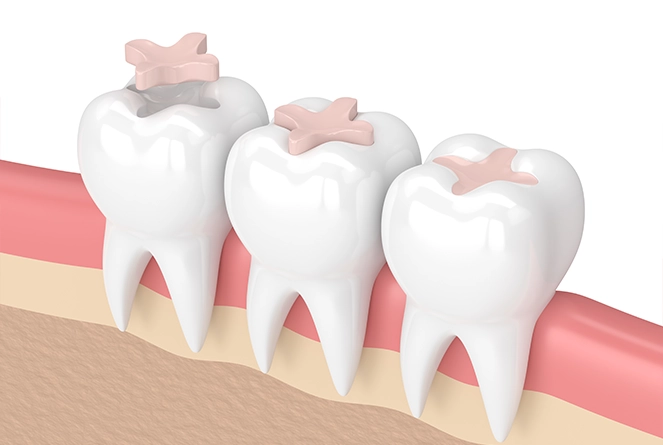
Inlays
An inlay fits within the chewing surface of the tooth, replacing the damaged or decayed area without covering the cusps, which are the raised points of your tooth. They’re ideal for moderate cavities or when a regular filling wouldn’t be strong enough.
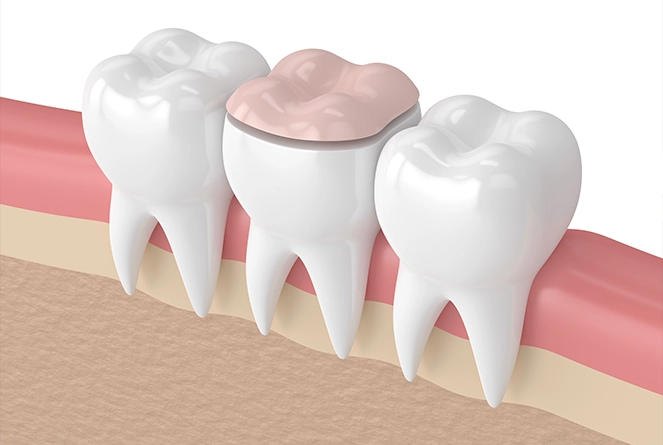
Onlays
Onlays extend over one or more cusps for added reinforcement. Often referred to as “partial crowns,” they offer the strength of a crown but with a more conservative approach.
Both inlays and onlays focus on preserving healthy tooth structure, as only the affected areas are removed. They’re excellent options for patients who want a durable, long-lasting restoration with a more natural, minimally invasive treatment.
When do you need a dental crown?
A dental crown may be recommended when your tooth:
- Has extensive decay that can’t be repaired with a regular filling
- Has large existing restorations and little natural tooth left to hold a new filling
- Has a broken filling or a failing old restoration
- Has been treated with root canal therapy and needs protection
- Has cracks, fractures, or weakened enamel (including cracked tooth syndrome)
- Shows heavy wear from grinding, clenching, or acid erosion
- Has severe discolouration, irregular shape, or enamel defects
- Requires added strength or support, such as to anchor a dental bridge
Put simply, if a tooth is structurally weakened and can no longer hold up on its own, a crown provides the strength, stability, and protection it needs to function comfortably again.
What to expect when you get a dental crown
Typically, there are six major stages in dental crown treatments. Here’s what usually happens from start to finish:
1. Consultation & assessment
Your dentist examines the tooth, takes X-rays if needed, and discusses the most appropriate treatment options based on its condition.
2. Tooth preparation
Only the damaged or decayed areas are removed, preserving as much healthy tooth structure as possible. The tooth is then carefully shaped to create the ideal space for your full or partial crown.
3. Digital scan or impression
A highly accurate 3D digital scan or traditional impression is taken to ensure your crown fits securely and comfortably.
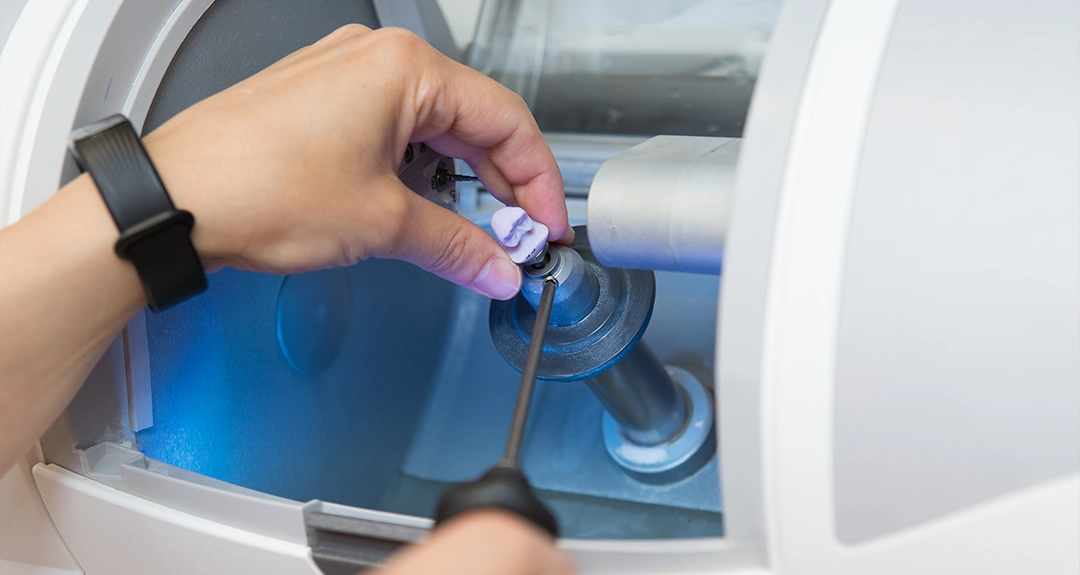
4. Crown design & fabrication
Depending on the technology used:
- Your crown may be milled on the same day using systems like CEREC, or
- It may be custom-made in a dental lab, which can take about one to two weeks.
5. Temporary crown (if needed)
If your final crown isn’t ready immediately, a temporary crown is placed to protect your prepared tooth and keep you comfortable.
6. Fitting & bonding
Once ready, your dentist checks the fit, shape, bite, and colour. When everything looks and feels right, the crown is permanently bonded, restoring your tooth’s strength, function, and appearance.
How long do dental crowns last?
With proper care, dental crowns are designed to be long-lasting restorations. On average, crowns last:
- 5–10 years for most common materials
- 10–15+ years for high-strength options like zirconia or gold
- And in many cases, even longer with excellent oral hygiene and regular dental maintenance
A crown’s lifespan depends on several factors, including:
- How well you care for your teeth at home
- Whether you grind or clench your teeth
- Your eating and chewing habits
- The condition of the tooth beneath the crown
- Routine dental check-ups and professional cleaning
The better your daily habits, the longer your crown and your natural tooth can stay healthy and strong.

Simple tips for long-lasting results
Dental crowns don’t need special products or complicated routines. A few habits make all the difference:
✔ Brush twice daily: Use a soft-bristled brush and fluoride toothpaste.
✔ Floss daily: Gently clean around the crown to avoid plaque build-up.
✔ Avoid using teeth as tools: No using teeth to open packets, cut or grip items.
✔ Be mindful of extreme temperatures: Avoid chewing ice and limit rapid changes between very hot and very cold foods, as thermal stress can lead to cracks over time.
✔ Be mindful of very hard or sticky foods: Caramels or lollies can pull on your crown, and biting hard candy can damage it.
✔ Wear a nightguard if you grind: This is one of the biggest ways to protect your investment.
✔ Visit your dentist regularly: Professional cleaning and routine checks ensure your crown and the tooth under it stay healthy.
Other helpful things to know
- Crowns don’t get cavities, but the tooth underneath can, so hygiene really matters.
- Modern crowns are incredibly natural-looking — people won’t notice you have one.
- Sensitivity after placement is normal and usually settles within a few days.
- If a crown chips or feels loose, visit your dentist immediately to have it fixed.

Giving your tooth a second chance
A dental crown restores strength and protection to a weakened tooth, helping it function comfortably again. With good daily hygiene, regular dental check-ups, and prompt attention if something doesn’t feel right, your crown can last for many years.
In many ways, a dental crown is an investment in yourself. It can play a major role in your comfort, confidence, and oral health today and into your future. For many people, it’s the ideal solution to a weakened or worn down tooth, making the difference between losing that tooth or enjoying its use for years to come. Well-made crowns can restore strength, protect what’s left of natural teeth, and blend in so seamlessly that many people feel like it’s just another natural tooth.
Once you’ve got a crown, what’s the best way to keep your smile in excellent condition? Stay consistent with your daily brushing and flossing, keep up with your routine dental check-ups, and pay attention when something doesn’t feel quite right.
Here’s to your future of healthy, strong, and shining smiles for many years to come!